

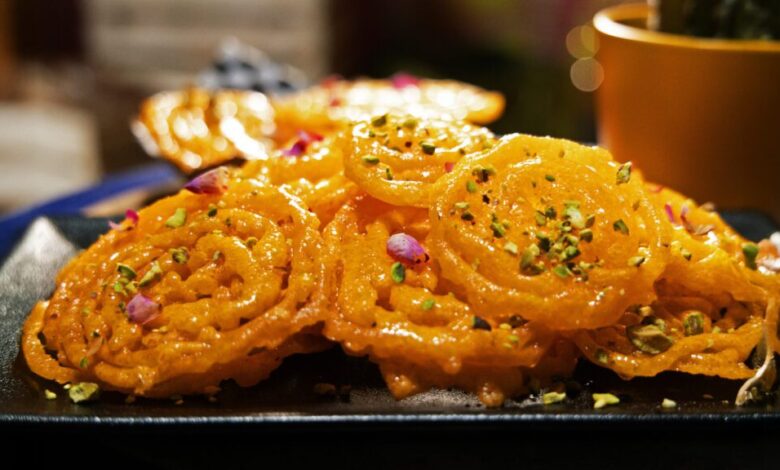
Jalebi has been a familiar part of festive celebrations for generations. However, its story goes back much further than the sweet shops where we see it today.
Its familiar spiral shape is linked to West Asian sweets such as zalabiya and zolbiya. Over time, similar sweets became part of Indian food traditions and were mentioned in older Indian texts.
If you are curious about jalebi’s origin, its journey across different regions makes its history especially interesting. The recipe changed along the way, but jalebi eventually became a much-loved sweet for celebrations such as Dussehra.
The Story Behind Jalebi
Jalebi’s West Asian Roots and Indian Journey
Ancient West Asian sweets such as zalabiya or zolbiya are often linked to jalebi’s history. A 10th-century Arabic cookbook, Kitab al-Tabikh, includes a recipe for a sweet called zalabiya, which is often considered an early relative of jalebi. Similar sweets later appeared in other regions as recipes traveled between different food traditions.
By the medieval period, jalebi-like sweets had become part of food traditions in the Indian subcontinent. Indian literary sources also mention jalebi-like sweets, including the Jain work Priyamkara-nrpa-katha, which dates to around the 15th century. Some Sanskrit sources also mention a sweet by names such as jalavallika. The recipe and shape changed locally over time.
Over time, jalebi became part of celebrations, weddings and religious occasions in different regions. It also became a familiar part of Dussehra special food traditions in some areas. These references show how jalebi changed as it became part of different regional food traditions.
Jalebi vs. Imarti: What’s the Difference?
Jalebi and imarti can look similar because both are piped into hot oil or ghee and soaked in sugar syrup. The main difference is in the batter, which gives each sweet a different texture and shape. Jalebi is commonly made with refined flour, while some recipes also use gram flour.
Traditionally, Imarti is made from a batter of urad dal. Dense, chewy, flower-like shapes made from thickened batter. They are two different preparations, not two names for the same dessert.
Quick Jalebi Recipe
Ingredients:
| Item | Quantity |
| All-purpose flour | 1 cup |
| Cornflour | 2 tbsp |
| Baking powder | ½ tsp |
| Yogurt | ½ cup |
| Water | ½ cup |
| Food coloring | Optional |
| Sugar | 1 cup |
| Water for syrup | ½ cup |
| Saffron or cardamom | A small amount |
| Lime juice | A few drops |
| Oil or ghee | For frying |
How to Make It:
Step 1: Add the flour, cornflour and baking powder to a bowl.
Step 2: Mix in the yogurt, then add water little by little to make a smooth, flowing batter. Let it rest before piping.
Step 3: Add the food coloring, then transfer the batter to a piping bag.
Step 4: Heat the oil or ghee in a kadhai over medium heat. Pipe the batter into small spirals and fry until crisp and golden.
Step 5: Cook the sugar and water until the syrup reaches the desired consistency. Add saffron or cardamom.
Step 6: Dip the hot jalebis in the warm syrup until evenly coated. Remove them and let excess syrup drain before serving.
Other Dussehra Special Foods and Sweets
Jalebi is usually served with several festive sweets. Popular choices are:
- Gulab Jamun: Soft fried milk-based dumplings soaked in sugar syrup, often flavored with cardamom or rose.
- Besan Ladoo: Gram flour is roasted with ghee, mixed with sugar and shaped into round ladoos.
- Malpua: Soft, sweet pancakes made with flour and milk, usually served with syrup or rabri.
- Nariyal Barfi: A coconut-based sweet prepared with sugar and often milk solids.
- Gulgule: Small fried sweet dumplings commonly prepared with flour, jaggery or sugar, and fennel.
Conclusion
Jalebi has travelled far from its early West Asian roots to become a familiar part of India’s festive food traditions. Its recipe changed as it moved between regions, while sweets such as imarti developed their own distinct shapes and textures.
Today, jalebi remains a popular choice for celebrations, including Dussehra. If you are planning a festive spread, you can pair freshly made jalebi with other traditional sweets such as gulab jamun, besan ladoo or malpua.