

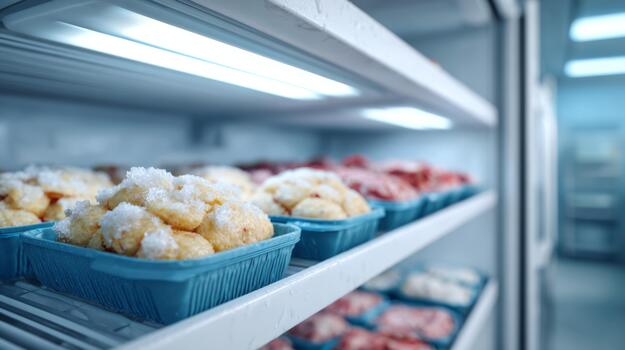
Orders placed with frozen food suppliers for restaurants should reflect the dishes the kitchen expects to sell and the space available when the delivery arrives. Buying ahead can reduce the frequency of ordering, but a large consignment also occupies room needed by other products. The useful order quantity sits between likely demand, delivery timing and the freezer’s working capacity.
Start with a stock count that distinguishes unopened packs from usable portions already in production. A figure based only on cartons can conceal open bags and prepared items that will cover part of the next service. Check what is available before turning a sales forecast into a purchasing request.
Translate the menu into product quantities
Estimate demand by dish, using recent sales alongside reservations and known changes to the menu. The same number of covers can produce a different ingredient requirement if customers choose different dishes. Where one frozen product appears across several menu items, combine those requirements before ordering.
Allow for the actual yield and portion specified by the kitchen. A purchased kilogram and a kilogram ready to serve are not always interchangeable, particularly when trimming or other preparation is involved. Use the yield established for that product rather than applying a general assumption across different formats.
Then consider the delivery interval. An order covering the gap until the next reliable delivery is a different commitment from buying enough for several weeks. Discuss minimum quantities, order deadlines and available pack sizes before setting the purchasing routine.
Assess space in the form it will be used
Freezer capacity is not simply the volume left when products are tightly stacked. Staff need to identify stock and retrieve it, while the equipment must be loaded in accordance with its operating instructions. Packaging dimensions can therefore matter as much as the total weight of the order.
Keep space for products already prepared for later service. If the kitchen produces components in advance, that internal stock competes with incoming purchases for the same shelves. Coordinate preparation and deliveries so both can be accommodated.
Follow the product’s storage instructions, including those for any opened packs, and the temperatures set in the kitchen’s food-safety procedures. Commercial guidance commonly uses -18°C or below for frozen storage; loading a delivery should not prevent the freezer from maintaining its required conditions.
Checks before confirming the order
- Stock already available, including open packs and prepared components.
- Quantities needed until the next delivery and any pack-size restrictions.
- Space available on receipt, with labels and existing stock still accessible.
Make sure the deliveries are on time
Agree a receiving time when someone can check the products and transfer them promptly to storage. An order arriving during the busiest preparation period can create a handling problem even if its quantity is correct.
Rotate stock by the relevant dates and preserve product identification when outer cartons are removed. Keep the information needed to trace the batch and follow its instructions.
If demand changes, adjust the next order before adding another layer of stock. For a menu change, identify any remaining packs of the outgoing product and decide how they will be used within their permitted storage period.


