
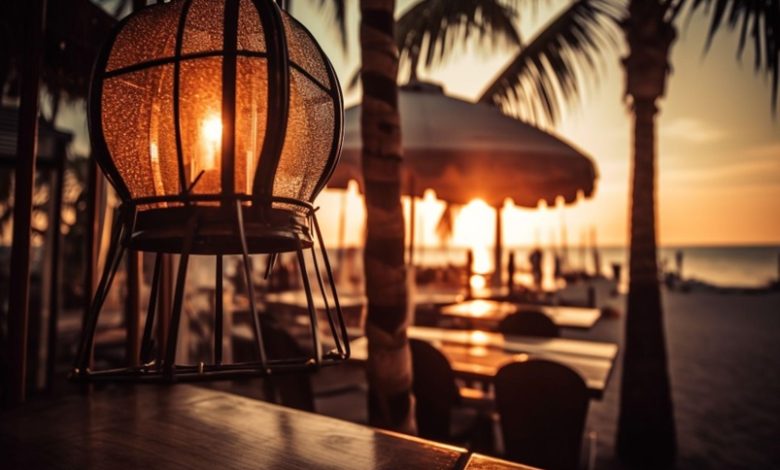
Sunset dining gets booked on an image and arrives as a logistics problem. Someone reserved a table for seven, sunset was at quarter past, the table turned out to be behind a structural column, and a shower at six moved everyone under cover anyway. None of that reflects badly on the restaurant. It reflects a booking made without asking the handful of questions that would have settled it. Five mistakes account for most disappointing evenings at a seaside restaurant in Singapore, and all are avoidable in a single phone call.
1. Booking a Time Without Checking When Sunset Actually Is
Sunset shifts across the year, and the window where the light is at its best is brief. A table booked for the hour after sunset means arriving at a dark sky and a sea you cannot see.
Check the actual sunset time for your date and book to arrive comfortably before it, allowing for being seated, ordering, and settling. Arriving forty-five minutes ahead rather than five minutes ahead is the difference between watching it and catching the end of it.
Ask the restaurant what time they recommend for your date, since staff who watch it nightly know exactly when the light is best from their tables.
2. Assuming Any Table Has the View
Beachfront venues have tables with uninterrupted views, tables with partial views, and tables where a column, a planter, or another section sits in the way.
Request a specific position rather than booking for two and hoping. Ask which tables face the sunset directly, whether a particular table can be held, and whether there is any charge or minimum associated with the better positions.
Where a restaurant cannot guarantee a specific table, ask how seating is allocated on arrival and whether arriving earlier improves the chances.
3. Not Asking What Happens If It Rains
Weather moves quickly, and an outdoor table can become unusable at short notice.
Ask what the contingency is: whether there is covered seating, whether the view is retained from it, whether the booking transfers automatically, and what happens if the covered area is full. A venue with a clear answer has handled it many times; one without a plan will improvise with everyone else’s bookings at the same moment.
4. Overlooking the Tide and What the Beach Actually Looks Like
Tide affects how a beachfront view presents, and at low tide the water may sit considerably further out than the photographs suggested.
For a particularly significant occasion this is worth checking against tide timings for the date, since the difference between a high tide evening and a low tide one is noticeable from a dining table and is not something a restaurant controls.
5. Leaving the Booking Too Late for a Popular Evening
Weekend sunsets, public holidays, and dates around Valentine’s Day and similar occasions book out well in advance for the best positions.
Booking a fortnight ahead for a Saturday in good weather frequently means accepting whatever remains. Where the occasion matters, booking early and confirming the specific table is what secures it.
Confirming the Details a Few Days Before
A short call a few days ahead confirming the booking, the table position, the arrival time, and any arrangement for the occasion removes most of what otherwise goes wrong.
It is also the moment to mention anything the restaurant should prepare, whether a cake, a particular seating arrangement, or dietary requirements. Venue handling occasions regularly accommodate this readily when given notice and cannot do much about it when told on arrival, which is when most people think to mention it.
Contact Coastes to discuss table positions, sunset timing for your date, and what we can arrange for your occasion.